UPVC Sliding Windows vs Traditional Windows: Which Is Better for Energy Efficiency?
Energy efficiency is no longer a luxury feature in home design. It is a financial necessity. With rising electricity bills, tightening building regulations, and growing environmental awareness, homeowners across India and globally are re-evaluating every element of their home that contributes to heat gain, heat loss, or air leakage. Windows sit right at the center of that conversation.
Among all the options available today, UPVC sliding windows have become one of the most discussed upgrades for homeowners wanting to reduce their energy footprint without compromising on aesthetics or functionality. But how do they genuinely compare to traditional windows made from wood, aluminium, or single-pane glass frames? And is the investment worth it for your specific situation?
This guide breaks down the full comparison, covering thermal performance, air leakage, long-term cost savings, climate suitability, and real-world durability, so you can make a confident, informed decision.
Understanding the Difference Between UPVC and Traditional Window Materials
Before comparing performance, it helps to understand what each material actually is and how it behaves.
What Are UPVC Sliding Windows?
UPVC stands for Unplasticized Polyvinyl Chloride, a rigid, chemically stable form of PVC that does not contain plasticizers, making it far more durable and structurally sound than standard PVC. In window manufacturing, UPVC frames are extruded into multi-chambered profiles, meaning the hollow interior of the frame is divided into multiple sealed air pockets. These chambers act as natural thermal barriers, slowing the transfer of heat or cold through the frame itself.
Sliding windows built with UPVC frames are designed to glide horizontally on tracks, making them space-efficient and easy to operate. When combined with double or triple glazing, argon gas fills between panes, and precision weatherstripping seals, UPVC sliding windows become a comprehensive thermal management system for your home.
What Are Traditional Windows?
Traditional windows broadly refers to window frames made from wood, standard aluminium, or mild steel with single-pane glass. In many Indian homes and older constructions globally, these window types remain the default choice due to their initial affordability and familiarity.
Wood frames offer natural insulation properties but require significant maintenance, are vulnerable to moisture, warping, and termite damage, and lose their sealing effectiveness over time. Aluminium frames are strong and slim but conduct heat rapidly, creating what engineers call thermal bridges, which pull heat out of your home in winter or allow external heat to pour in during summer. Single-pane glass, regardless of the frame material, provides almost no meaningful thermal resistance.
Energy Efficiency at a Glance: Side-by-Side Comparison
Here is a direct comparison of how UPVC sliding windows perform against the most common traditional window types across the metrics that matter most for energy efficiency.
| Performance Factor | UPVC Sliding | Wood Frame | Aluminium Frame | Steel Frame |
| Thermal Insulation | Excellent | Good | Poor | Very Poor |
| Air Leakage Control | Excellent | Moderate | Moderate | Poor |
| Condensation Resistance | High | Low | Low | Very Low |
| UV and Heat Resistance | Excellent | Moderate | Good | Poor |
| Maintenance Required | Very Low | High | Low | High |
| Lifespan (Years) | 30 to 50 | 15 to 25 | 25 to 40 | 10 to 20 |
| Typical Upfront Cost | Medium | Medium to High | Medium | Low |
Thermal Performance: Where UPVC Sliding Windows Pull Ahead
The Multi-Chamber Frame Advantage
The defining structural advantage of UPVC sliding windows is the multi-chambered profile inside the frame. Each chamber traps still air, which is one of the most effective natural insulators available. Standard aluminium frames are hollow and conduct heat approximately 1,000 times more readily than UPVC material. This means that on a hot summer day, an aluminium frame actively transfers outdoor heat into your living space, forcing your air conditioner to work harder and consume more electricity.
UPVC frames with four or more internal chambers can achieve full-frame thermal resistance values that match or exceed the performance of the glass unit itself, creating a genuinely uniform thermal barrier across the entire window assembly.
Double Glazing and Argon Gas Fills
UPVC sliding windows are engineered to accommodate double-glazed or triple-glazed Insulated Glass Units. A double-glazed unit consists of two panes of glass separated by a sealed gap, typically 12 to 16 mm, filled with air or an inert gas such as argon. Argon gas is denser than air and conducts heat less readily, adding a meaningful additional layer of thermal resistance.
Traditional single-pane windows, which remain common in older Indian homes, offer virtually no thermal resistance beyond the glass itself. Studies consistently show that replacing single-pane windows with double-glazed UPVC units reduces heat transfer through the window by 50 to 70 percent. This directly translates into measurable reductions in both air conditioning and heating loads.
Air Leakage and Weatherproofing: An Underrated Energy Factor
Thermal conductivity through the frame and glass gets most of the attention in energy efficiency discussions, but air leakage is equally significant. A poorly sealed window allows conditioned air to escape and unconditioned outside air to infiltrate, undermining even the best insulating glass unit.
Traditional wooden windows shrink and expand with humidity and temperature changes, causing gaps to form in the frame joints and around the sash over time. Aluminium and steel frames often develop gaps where the frame meets the wall opening. Both issues allow air infiltration that can account for a significant portion of your home’s total energy loss.
UPVC sliding windows use precision-engineered weatherstripping seals along the entire perimeter of the sliding sash. These seals compress against the frame when the window is closed, creating a near-airtight barrier. Modern UPVC sliding designs also incorporate pile seals and rubber gaskets that maintain their effectiveness across decades of use without manual maintenance or periodic replacement.
Real-World Energy Cost Savings: What to Expect
Reduced Cooling Costs in Hot Climates
In cities like Delhi, Mumbai, Chennai, and Hyderabad, where summer temperatures regularly exceed 40 degrees Celsius, windows that allow solar heat gain and conduct outdoor heat directly into the home place enormous demand on air conditioning systems. Research indicates that homes with high-performance double-glazed UPVC windows can reduce air conditioning energy consumption by 20 to 30 percent compared to homes with single-pane traditional windows.
The UPVC frame material itself is also UV resistant and reflects a portion of solar radiation rather than absorbing and re-radiating it as heat, as darker aluminium and steel frames tend to do.
Heating Savings and Acoustic Benefits
In cooler climates or during winter months in northern India, the insulating properties of UPVC sliding windows prevent warmth from escaping through the glass and frame, reducing the demand on heating systems. The same double-glazed sealed unit that reduces heat transfer also provides meaningful acoustic insulation, reducing external noise by 35 to 40 decibels in many configurations. For homes near busy roads, railways, or commercial areas, this is a quality-of-life improvement that accompanies the energy efficiency benefit.
Durability, Maintenance, and Long-Term Value
Energy efficiency over the life of a window is not just about initial performance. It is also about how consistently that performance holds up over years and decades of use. A window that performs well at installation but degrades within five years due to warping, corrosion, or seal failure will cost you more in the long run through both energy bills and replacement expenses.
UPVC is chemically inert, meaning it does not corrode, rust, or rot. It does not absorb moisture and therefore does not warp or swell in humid conditions. Traditional wooden frames require periodic painting, sealing, and termite treatment to maintain both appearance and structural integrity. Steel frames are highly prone to rust in coastal or high-humidity environments. Aluminium holds up better but still conducts heat regardless of its surface condition.
UPVC sliding windows require only occasional wiping with a damp cloth to maintain appearance and function. The hardware, tracks, and seals in quality UPVC systems are engineered for 25,000 or more open and close cycles without degradation, supporting an effective window lifespan of 30 to 50 years with minimal intervention.
Which Climate Conditions Benefit Most from UPVC Sliding Windows?
Hot and Humid Regions
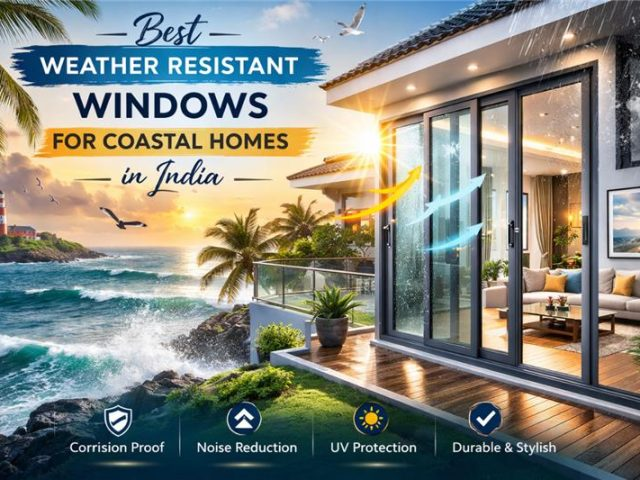
UPVC is highly resistant to UV degradation and does not absorb moisture, making it an outstanding choice for coastal cities like Mumbai, Kochi, Visakhapatnam, and Chennai where salt air, high humidity, and intense UV exposure rapidly deteriorate traditional wooden and steel frames. Double glazing with solar control glass can further reduce solar heat gain in these regions.
Composite and Cold Climates
In cities like Delhi, Pune, and Bangalore that experience both hot summers and cooler winters, the bidirectional insulating capability of UPVC sliding windows delivers year-round benefits. In winter, the insulated frames and double-glazed units prevent heat loss; in summer, they block incoming heat. Homes in these zones typically see the fastest return on investment from upgrading to high-performance UPVC windows.[Text Wrapping Break][Text Wrapping Break]The Verdict: Are UPVC Sliding Windows Worth the Upgrade?
The evidence is clear. When it comes to energy efficiency, long-term cost savings, durability, and low maintenance requirements, UPVC sliding windows outperform traditional window materials across almost every measurable metric.
Traditional wooden windows have charm and natural appeal but demand high maintenance and lose their sealing performance over time. Aluminium frames are durable but thermally poor, actively creating pathways for heat transfer that increase your energy bills year after year. Steel windows may be economical upfront but corrode, conduct heat, and typically need replacement within 10 to 20 years.
UPVC sliding windows, particularly when fitted with double glazing and quality argon gas fills, create a complete thermal and acoustic barrier that delivers consistent energy savings from the first month of installation through 30 or more years of use. For homeowners looking to reduce electricity bills, improve interior comfort, and make a lasting investment in their property, upgrading to UPVC sliding windows is one of the highest-return improvements available today.
If you are building a new home or planning a renovation in 2026, choosing UPVC sliding windows for energy efficiency is not just a smart decision for your wallet. It is a responsible choice for the environment and a lasting improvement to your quality of life.
Frequently Asked Questions
1.How much more energy efficient are UPVC sliding windows compared to traditional windows? [Text Wrapping Break]Studies show that quality double-glazed UPVC sliding windows can be up to 40 percent more energy efficient than traditional single-pane window types. In practical terms, this typically translates to a 20 to 30 percent reduction in air conditioning or heating energy consumption, depending on your climate and home design.
2.Do UPVC sliding windows work well in Indian climates? [Text Wrapping Break]Yes. UPVC is UV resistant, moisture resistant, and thermally stable across a wide temperature range, making it well suited to India’s diverse climates. Whether you live in a hot and humid coastal city or a composite-climate metropolitan area, UPVC sliding windows outperform traditional aluminium, steel, and single-glazed wooden windows on energy efficiency.
3. Are UPVC sliding windows more expensive than traditional options? [Text Wrapping Break]UPVC sliding windows have a higher initial cost than basic steel or aluminium frame windows but are comparable to mid-grade wooden windows. The difference is typically recovered within three to seven years through energy savings, and the 30 to 50 year lifespan of quality UPVC systems makes them significantly more cost-effective over the full life of the window.
4. Do UPVC sliding windows require much maintenance? [Text Wrapping Break]No. This is one of their key advantages. Unlike wooden frames that require periodic painting, sealing, and treatment, UPVC requires only routine cleaning with mild soap and water. There is no risk of rust, rot, or warping, and the hardware and seals are engineered to last for decades.
5. Can UPVC sliding windows reduce noise from outside?[Text Wrapping Break]Yes. The double-glazed units used with UPVC sliding windows provide meaningful acoustic insulation. Depending on the glass specification and installation quality, exterior noise reduction of 35 to 40 decibels is achievable, making them a practical upgrade for homes in urban or high-traffic environments.
6. What glass should I pair with UPVC sliding windows for maximum energy efficiency? [Text Wrapping Break]For hot climates, solar control low-E glass with argon gas fill between the panes delivers the best performance by reflecting infrared heat while allowing visible light to pass through. In cooler climates, standard double glazing with argon fill provides excellent thermal retention. Triple glazing is available for extreme climate conditions and passive house applications.
Name: VDecor – Premium Quality uPVC Doors & Windows
Email: vdecor904@gmail.com
Phone: 070085 10216
Address: PLOT NO-1760, Temple Rd, opp. Dhakulai, Pratap Nagari, Cuttack, Urali, Odisha 753011
GMB: https://maps.app.goo.gl/Pao52BMAvHdCS4hD8?g_st=iw