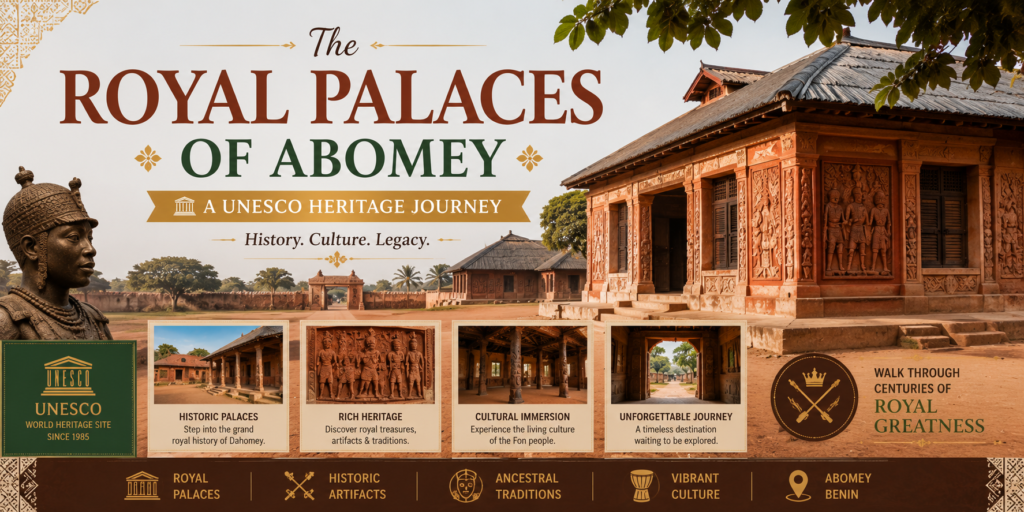
Stepping into Benin is like opening a living history book. For travelers seeking deep cultural roots, ancient legacies, and raw architectural beauty, there is one destination in this West African gem that demands to be explored: the Royal Palaces of Abomey. Once the roaring heart of the powerful Kingdom of Dahomey, this UNESCO World Heritage site is a place where legends of kings, fierce women warriors, and earth-built castles still whisper to those who visit.
If you are planning your next big adventure, here is your ultimate guide to understanding, appreciating, and visiting this incredible piece of African history.
1. What are the Royal Palaces of Abomey?
The Royal Palaces of Abomey are a massive collection of earthen buildings located in the heart of Benin. Spanning nearly 47 hectares, this site served as the political, spiritual, and military headquarters of the Kingdom of Dahomey (historically known as Danxomé). Rather than being just a single grand castle, the site is a fascinating complex of multiple individual palaces built side-by-side, surrounded by protective mud-brick walls and deep defensive moats.
2. Where is Abomey located?
Abomey is situated in southern Benin, approximately 145 kilometers (around 90 miles) north of Cotonou, the country’s main economic hub and largest city. The journey from the coastal capital to this historical interior city takes about two and a half to three hours by road, making it a highly accessible destination for day-trippers and overnight travelers alike.
3. Who built the Royal Palaces of Abomey?
The palaces were built by the Fon people, who established the Kingdom of Dahomey in 1625. Following a unique tradition started by King Houegbadja, each successive ruler of the kingdom was forbidden from living in the palace of their predecessor. Instead, each new king had to construct their own brand-new palace right next to the existing ones. Over a span of nearly three centuries, twelve consecutive kings ruled Dahomey, creating a sprawling dynastic compound of majestic dwellings, ancestral tombs, and grand ceremonial courtyards.
4. What is the history of the Kingdom of Dahomey?
From 1625 to 1900, the Kingdom of Dahomey rose to become one of the most organized, militaristic, and commercially powerful empires on the western coast of Africa. The kingdom built a highly centralized state, developed sophisticated court rituals, and dominated regional trade. They famously interacted with European powers, unfortunately playing a major role in the transatlantic slave trade before pivoting to palm oil. The empire eventually met its end when French colonial forces invaded and conquered the region in the late 19th century, leading to the deposition of the final sovereign, King Gbehanzin.
5. Why are the Abomey Palaces famous?
The palaces are globally renowned for their incredible engineering, their deep connection to West African Vodun (Voodoo) spirituality, and their unique artistic design. They are the ultimate material evidence of a vanished empire. What makes them particularly famous is the fact that they survived the colonial French-Dahomeyan wars—even after King Gbehanzin ordered parts of the city to be burned down in 1892 rather than letting them fall intact into enemy hands.
6. What can you see at the Abomey Historical Museum today?
Today, the restored palaces of King Ghézo and King Glélé house the Abomey Historical Museum. Visitors can step inside these preserved earthen halls to marvel at actual royal artifacts. The museum boasts an impressive collection of authentic items, including:
- The sacred, towering thrones of Dahomeyan kings (some mounted on human skulls to show military dominance).
- Historic weaponry, including royal scepters (recalcides) and ceremonial swords.
- Ornate, hand-woven cotton tapestries and appliqué cloths that tell stories of historic battles.
- Mystical Vodun shrines and personal items belonging to the royal family.
7. Who were the Dahomey Amazons (Agojie)?
You might recognize them from modern blockbuster films, but the “Dahomey Amazons”—locally known as the Agojie or Mino (meaning “our mothers”)—were completely real. They were an elite, all-female military regiment within the Dahomey army. Known for their extreme discipline, combat prowess, and fearlessness in battle, the Agojie lived within the royal palace compounds and served as the personal bodyguards to the king. Walking through the courtyards of Abomey, you can still feel the lingering presence of these legendary female warriors.
8. What makes the architecture of the Abomey Palaces unique?
The palaces are a rare masterclass in traditional earth and cob construction. Built entirely of red-clay soil, water, and organic binders like straw, the walls naturally regulate the indoor temperature, keeping the interiors cool against the blistering West African sun. Additionally, the external walls are decorated with vibrant polychrome bas-reliefs. These clay-carved murals were painted using natural pigments made from seeds, soot, kaolin, and local earth. They served as a visual history book, illustrating military conquests, symbolic royal animals (like the shark for King Gbehanzin or the buffalo for King Ghezo), and Fon cosmology for a largely non-literate public.
9. When did the Abomey Palaces become a UNESCO World Heritage site?
The Royal Palaces of Abomey were inscribed on the UNESCO World Heritage list in 1985. Initially, due to a severe tornado that damaged the structures and the ongoing threat of weathering, the site was placed on the “List of World Heritage in Danger.” Thanks to extensive international cooperation, local restoration efforts, and traditional plastering techniques passed down through generations, the site was successfully removed from the danger list in 2007.
10. Is it safe to travel to Abomey, Benin?
Yes, traveling to Abomey is generally very safe. Benin is widely regarded as one of the most peaceful and politically stable countries in West Africa. The local people of Abomey are incredibly welcoming and proud to share their deep cultural heritage with international travelers. As with traveling anywhere, it is wise to hire a licensed local guide at the museum entrance to ensure you respect local customs and get the absolute most out of your historical tour.
11. What are the best travel tips for visiting Abomey?
To make your trip smooth and memorable, keep these simple tips in mind:
- Wear comfortable footwear: You will be doing a lot of walking across dusty, sandy courtyards.
- Stay hydrated: Keep plenty of bottled water on hand, as midday temperatures can get quite high.
- Respect photography rules: Photography is allowed in some outer courtyards but strictly prohibited inside the sacred tomb areas and certain museum rooms out of respect for ancestral spirits.
- Bring cash: Local currency (West African CFA franc) is essential for buying entrance tickets, hiring guides, and purchasing beautiful hand-made crafts from local artisans.
12. Do you need a visa to visit Benin and the Royal Palaces?
Unless you hold a passport from a visa-exempt African country, you will need a valid visa to enter Benin. Fortunately, you no longer have to visit a physical embassy or mail away your passport. The government of Benin offers a seamless electronic visa (e-Visa) system, allowing travelers to secure their entry travel documents online before booking their flights.
If you are planning to explore the historic palaces of Abomey and experience the vibrant culture of Benin, getting your e-Visa is your very first step.
Ready to Explore Benin? Let Us Help You Get There!
Planning an international trip should be filled with excitement, not paperwork. If you are ready to witness the historic Royal Palaces of Abomey, let us handle your travel visa so you can focus on packing your bags.
Secure your travel document effortlessly with our Benin 30-day Multiple-Entry e-Visa service.
Why choose us?
- Reliable Travel Visa ServicesOur global approach has assisted numerous travelers in obtaining their Visa.
- Round-the-Clock AssistanceReach out to us 24/7, and our experts will respond within 72 hours.
- Experienced Visa ConsultantsReceive expert guidance to ensure the acceptance of your application.
- Efficient Visa Application ProcessApply for your Visa in minutes with our simplified form.