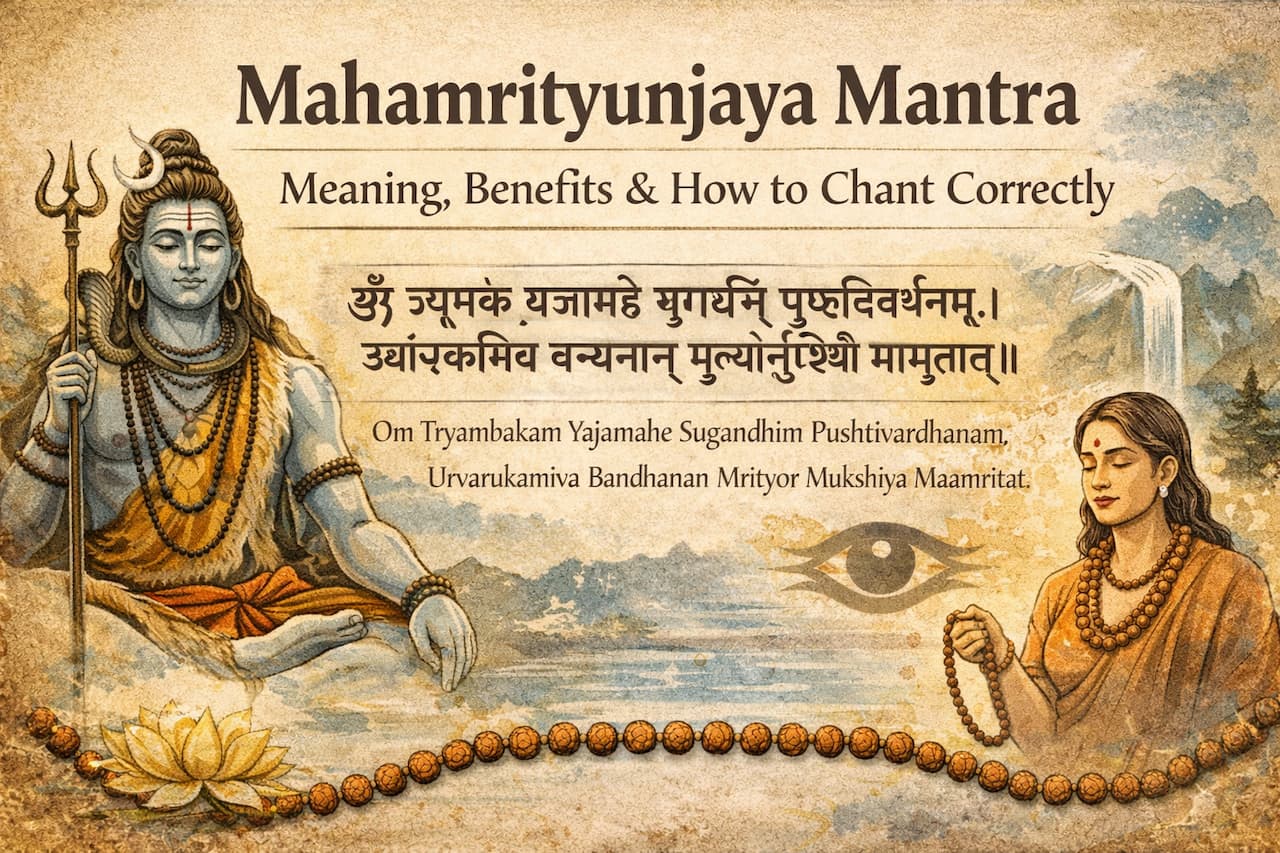
Mahamrityunjay Mantra is one of the most powerful and widely respected spiritual chants dedicated to Lord Shiva. Known as the “Great Death-Conquering Mantra,” it is deeply rooted in the Rig Veda and has been used for centuries for healing, protection, peace, and spiritual growth.
While many people are familiar with its basic meaning, there is still a lot of confusion, curiosity, and myths surrounding the Mahamrityunjay Mantra. Beginners often wonder how it should be chanted, whether it really works, what rules to follow, and what mistakes to avoid.
This article brings together frequently asked questions, clears common misunderstandings, and provides simple practical guidance so that anyone can understand and practice the Mahamrityunjay Mantra with clarity and confidence.
What Is the Mahamrityunjay Mantra?
The Mahamrityunjay Mantra is an ancient Vedic prayer dedicated to Lord Shiva. It is considered one of the most sacred chants in Hindu tradition.
The mantra is:
Om Tryambakam Yajamahe Sugandhim Pushtivardhanam
Urvarukamiva Bandhanan Mrityor Mukshiya Maamritat
It is traditionally chanted for protection from fear, emotional suffering, illness-related anxiety, and to seek spiritual liberation and peace.
What Does Mahamrityunjay Mantra Actually Mean?
A simple understanding of the Mahamrityunjay Mantra is:
It is a prayer to Lord Shiva asking for freedom from suffering, fear, and limitations—just like a ripe fruit naturally detaches from its stem.
It symbolizes:
- Emotional healing
- Mental peace
- Freedom from fear
- Spiritual growth
- Inner strength
It is not only about physical life but also about mental and emotional transformation.
Does Mahamrityunjay Mantra Really Work?
This is one of the most common questions.
From a spiritual perspective, devotees believe the Mahamrityunjay Mantra works through:
- Faith and devotion
- Sound vibrations
- Mental focus
- Emotional stability
From a psychological perspective, chanting acts like meditation, helping:
- Reduce stress
- Calm the nervous system
- Improve focus
- Reduce overthinking
So while experiences differ from person to person, many practitioners report a strong sense of peace and emotional relief through regular chanting.
Is There Any Rule for Chanting Mahamrityunjay Mantra?
There are no strict “compulsory” rules, but traditional guidance suggests:
- Sit in a clean and calm place
- Face a peaceful direction (often east)
- Maintain respectful posture
- Chant with focus and sincerity
- Avoid rushing
The most important rule is consistency and sincerity rather than rigid perfection.
How Many Times Should Mahamrityunjay Mantra Be Chanted?
Common traditional counts include:
- 11 times for beginners
- 21 or 51 times for regular practice
- 108 times for deep spiritual practice
A full mala of 108 beads is often used for counting.
However, the Mahamrityunjay Mantra is effective even in small daily practice if done regularly.
When Is the Best Time to Chant Mahamrityunjay Mantra?
The most preferred times are:
Early Morning
Known as the calmest and most spiritually supportive time.
Evening
Helps release stress from the day.
Monday
Traditionally associated with Lord Shiva.
During Stressful Moments
Can be used as a calming mental anchor anytime.
Can Women Chant Mahamrityunjay Mantra?
Yes. The Mahamrityunjay Mantra can be chanted by anyone regardless of gender, age, or background.
Spiritual practices in Hindu tradition are open to all sincere devotees.
Can You Listen Instead of Chanting?
Yes, listening to the Mahamrityunjay Mantra is also beneficial.
It helps:
- Learn pronunciation
- Create a peaceful environment
- Support meditation
- Reduce stress
However, active chanting usually creates a stronger personal focus and engagement.
Common Myths About Mahamrityunjay Mantra
Myth 1: It only works for sick people
Not true. It is also used for peace, strength, and spiritual growth.
Myth 2: You must chant perfectly
Sincerity matters more than perfect pronunciation.
Myth 3: You must be very religious
Anyone can chant with respect and intention.
Myth 4: Results are immediate
Spiritual practices usually show gradual effects over time.
Common Mistakes People Make
Chanting mechanically
Without attention, the practice becomes less meaningful.
Inconsistent practice
Skipping too often reduces benefits.
Overthinking pronunciation
Focus on intention first, refinement comes naturally.
Expecting guaranteed outcomes
The mantra is a spiritual tool, not a shortcut solution.
Simple Daily Practice for Beginners
A basic routine for Mahamrityunjay Mantra practice:
- Sit quietly for 1–2 minutes
- Take slow deep breaths
- Chant 11 or 21 times
- Stay silent for a minute after chanting
- Continue your day calmly
This small routine is enough to begin building consistency.
Benefits of Regular Practice
With consistent chanting of the Mahamrityunjay Mantra, many people experience:
- Reduced stress and anxiety
- Better emotional control
- Improved focus
- Inner calm
- Greater confidence
- Spiritual awareness
These benefits build gradually over time.
Conclusion
The Mahamrityunjay Mantra is not just a sacred chant but also a practical spiritual tool that supports emotional balance, mental clarity, and inner strength. Whether you are a beginner or a regular practitioner, understanding its meaning and practicing it with sincerity can bring meaningful changes in your daily life.
Instead of focusing on perfection or strict rules, the most important approach is simple consistency, calmness, and devotion. Over time, the Mahamrityunjay Mantra becomes not just something you chant, but something that supports your mindset, peace, and way of living.